Health Benefits of Hymenaea courbaril (Stinking Toe)
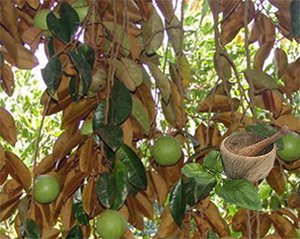
 Hymenaea courbaril which is popularly known as stinking toe due to the unpleasant odor of the seed’s pulp is a pretty common tree around the Caribbean as well as the South and Central America. The indigenous population of this region considers the fruit an important food and they do not find the smell unpleasant. Besides its hardwood that is used in furniture, the Stinking Toe is currently gaining popularity due to the vast health benefits of its fruits.
Carbohydrates are very important for the general health of the body. They are one of the main sources of energy for the body. The Stinking Toe, in its ordinary state, is a very rich source of carbohydrates. They are therefore very effective in supplying the body with a good and healthy amount of energy. Of the simple sugars that it contains, Fructose, a very important sugar is the most common.
Besides its being a rich source of energy, the fruit is also held in high regards in places such as Panama and Costa Rica due to its aphrodisiac characteristics, especially in men. Studies that have been conducted in respect to this have proven that the fruit has the capacity to boost sex drive in men. While it has not been concluded why the fruit exhibits such properties, it is widely used by people from all walks of life for this.
For each serving of Stinking toe, you stand to gain quite a high amount of iron. Iron is very essential in boosting the general health of the body. It is also a very essential metabolic nutrient. Iron is one of the major minerals that facilitate the formation of red blood cells. The red blood cells are on the other hand important in the transportation of both oxygen and nutrients all through the body.
In certain parts of Asia, Stinking Toe is used as a delicacy, especially for those who are on a weight-loss plan. This is probably due to the fact that it has got high nutrition values but low calorie content. It has been observed to facilitate satiety without considerably raising the calorie intake of an individual.
The Locust has also proven to be pretty beneficial for the respiratory tract. The young leaves of the tree can be used in remedying a number of respiratory tract diseases. Some of the conditions that can be treated using the leaves of the Stinking Toe include Asthma, Bronchitis, Cough as well as Sore throat.
The Locust’s blossoms are renowned for their emollient, anti-spasmodic and diuretic characteristics. They can therefore be used to boost the skin health. The fresh flowers of the tree can be crushed and used to make a paste that is used to effectively heal skins after a burn. This is done by applying it on the area that is affected and left on for some hours. They will not only help in healing the area but also in considerably reducing inflammation.
The fruit which has got appetizing properties is used by athletes and bodybuilders especially from Central America. Coupled with other supplements, they are bound to greatly improve the performance of an individual.
Hymenaea courbaril which is popularly known as stinking toe due to the unpleasant odor of the seed’s pulp is a pretty common tree around the Caribbean as well as the South and Central America. The indigenous population of this region considers the fruit an important food and they do not find the smell unpleasant. Besides its hardwood that is used in furniture, the Stinking Toe is currently gaining popularity due to the vast health benefits of its fruits.
Carbohydrates are very important for the general health of the body. They are one of the main sources of energy for the body. The Stinking Toe, in its ordinary state, is a very rich source of carbohydrates. They are therefore very effective in supplying the body with a good and healthy amount of energy. Of the simple sugars that it contains, Fructose, a very important sugar is the most common.
Besides its being a rich source of energy, the fruit is also held in high regards in places such as Panama and Costa Rica due to its aphrodisiac characteristics, especially in men. Studies that have been conducted in respect to this have proven that the fruit has the capacity to boost sex drive in men. While it has not been concluded why the fruit exhibits such properties, it is widely used by people from all walks of life for this.
For each serving of Stinking toe, you stand to gain quite a high amount of iron. Iron is very essential in boosting the general health of the body. It is also a very essential metabolic nutrient. Iron is one of the major minerals that facilitate the formation of red blood cells. The red blood cells are on the other hand important in the transportation of both oxygen and nutrients all through the body.
In certain parts of Asia, Stinking Toe is used as a delicacy, especially for those who are on a weight-loss plan. This is probably due to the fact that it has got high nutrition values but low calorie content. It has been observed to facilitate satiety without considerably raising the calorie intake of an individual.
The Locust has also proven to be pretty beneficial for the respiratory tract. The young leaves of the tree can be used in remedying a number of respiratory tract diseases. Some of the conditions that can be treated using the leaves of the Stinking Toe include Asthma, Bronchitis, Cough as well as Sore throat.
The Locust’s blossoms are renowned for their emollient, anti-spasmodic and diuretic characteristics. They can therefore be used to boost the skin health. The fresh flowers of the tree can be crushed and used to make a paste that is used to effectively heal skins after a burn. This is done by applying it on the area that is affected and left on for some hours. They will not only help in healing the area but also in considerably reducing inflammation.
The fruit which has got appetizing properties is used by athletes and bodybuilders especially from Central America. Coupled with other supplements, they are bound to greatly improve the performance of an individual.
Read More
Categories:
Jamaican Herbs